Agile: The Theory, the Ritual, and the Reality
Agile is not about following ceremonies, but about achieving outcomes. Practices such as standups, retrospectives, story points, and task boards are valuable only when they improve communication, learning, adaptability, delivery, or customer value. When process compliance or metrics become the objective, these practices can turn into rituals with little real benefit. Agile maturity therefore means continuously assessing whether processes still solve the problems they were designed to address, and changing, simplifying, or removing them when they do not.
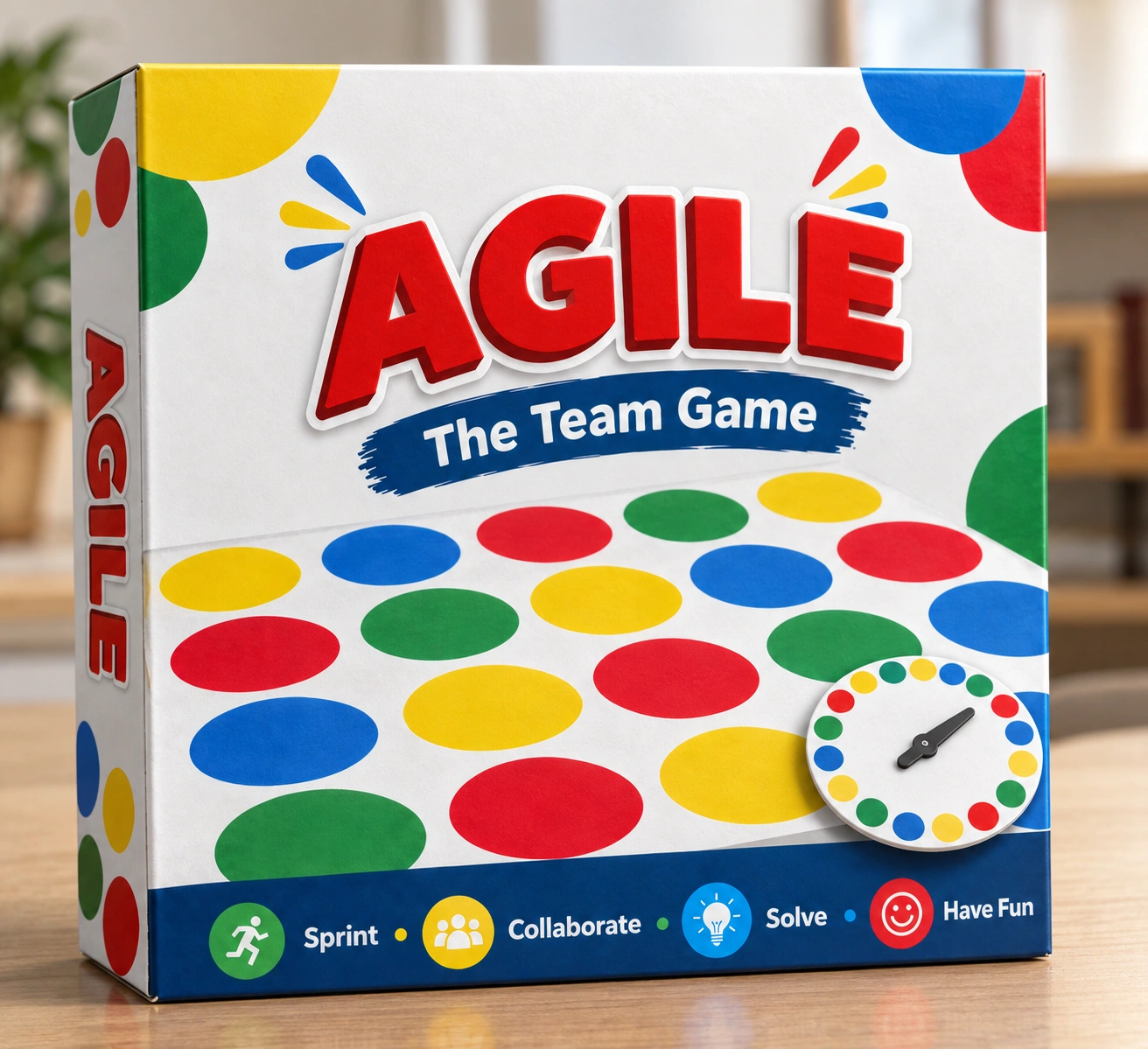
FIG 1.0 - AGILE is a corporate game more often than being a communication tool.
When we reach the point where management methodology are used as a pretext to make people gather share their life and talk, the principle seems to have been lost and replaced by a corporate package.
Related Insights
It Is Time to Return Engineering to Engineers
Productivity Is Not What We Think It Is
MXI.Studio Inauguration and History

MXI.STUDIO EDITORIAL
Productivity | Work | Metrics | Operations
The MXI.Studio Editorial is a collection of articles, ideas, and reflections written by the people behind MXI.Studio. We explore emerging technologies, innovation, industry trends, and the current challenges of an ever-evolving world.
Agile: The Theory, the Ritual, and the Reality
A gile has become a standard part of modern software development. Daily standups, sprint planning, backlog refinement, sprint reviews, retrospectives, story points, velocity and task boards are now familiar elements of software organizations. The vocabulary is widespread. The practices are often institutionalized. Yet the presence of Agile practices does not necessarily indicate the presence of Agile principles.
This distinction is important because Agile was not originally defined as a collection of meetings, estimation techniques or project-management tools. The Agile Manifesto, published in 2001, established four values: individuals and interactions over processes and tools, working software over comprehensive documentation, customer collaboration over contract negotiation, and responding to change over following a plan. The difference between those principles and their implementation provides a useful question for modern software organizations:
"When does an Agile practice create value, and when does it become a ritual?"
From principles to processes
The Agile Manifesto does not prescribe a specific organizational process. It describes values and principles intended to improve the way software is developed. Its principles emphasize frequent delivery of valuable software, collaboration between business and development, sustainable development, technical excellence, simplicity, self-organizing teams and regular reflection on how to become more effective.
This distinction matters because a principle can easily become translated into a process.
-
Reflection becomes a retrospective.
-
Frequent delivery becomes a sprint cadence.
-
Collaboration becomes a recurring meeting.
-
Work estimation becomes story points.
-
Transparency becomes a task board.
-
Measurement becomes velocity.
None of these transformations is inherently problematic. Processes can
make abstract principles easier to apply consistently. The problem
begins when the process becomes more important than the outcome it was
intended to produce.
A team can therefore follow every prescribed ceremony while still
experiencing unclear priorities, slow decision-making, excessive
technical debt, communication problems or organizational dependencies.
The process is visible.
The improvement is not necessarily visible.
The ceremony is not the objective
Scrum provides a useful example. The Scrum Guide defines the Sprint Retrospective as an opportunity for the Scrum Team to inspect how the previous Sprint went and identify the most helpful changes to improve effectiveness. The purpose is therefore not simply to hold a meeting at the end of every Sprint. The meeting exists to produce learning and improvement. That distinction changes how the practice should be evaluated. A retrospective that identifies a significant problem and leads to a meaningful change has served its purpose.
A retrospective that repeatedly
produces the same observations and the same action items without
changing the underlying situation may still satisfy the calendar
requirement, but it is no longer clearly producing the intended outcome.
The question is therefore not whether the retrospective happened.
The question is whether the team became more effective because it
happened.
This principle applies beyond retrospectives.
A daily Scrum, for example, is intended to help developers inspect
progress toward the Sprint Goal and adapt the plan for the next day. It
is a coordination mechanism, not simply a daily reporting session.
When participants primarily provide status updates to a manager rather
than coordinate their work with one another, the function of the meeting
has changed even if the meeting itself remains unchanged.
The same distinction appears throughout Agile practices:
| Practice | Intended function | Potential ritual |
|---|---|---|
| Daily coordination | Identify progress, dependencies and adaptations | Daily status reporting |
| Retrospective | Improve team effectiveness | Repeating complaints without change |
| Sprint planning | Establish a meaningful Sprint Goal and plan | Filling a fixed capacity |
| Story points | Support forecasting through relative estimation | Measuring individual productivity |
| Backlog refinement | Improve understanding and readiness of upcoming work | Maintaining an indefinitely large queue |
| Task board | Make work visible | Tracking activity rather than outcomes |
TAB 1 — Agile Practices vs. Ritual Traps
The difference is not the ceremony itself.
The difference is whether the ceremony continues to serve its purpose.
When measurement becomes the objective
Story points and velocity illustrate another form of process drift. Story points are generally used as a relative estimation technique. Velocity can then help a team forecast based on its previous delivery patterns. The difficulty begins when a forecasting mechanism becomes a performance target.
A Scrum.org discussion explicitly distinguishes productivity from story points, noting that Scrum productivity is not measured by the number of points completed. Similarly, Scrum.org has noted that velocity alone does not measure success. Velocity describes the amount of estimated work completed; it does not, by itself, establish whether customers received greater value or whether the product improved. This distinction is particularly important because measurements influence behavior.
If a team is evaluated on velocity, increasing the number can become more important than improving the product. Estimation practices may gradually adapt to the metric rather than the metric helping the team understand its work. The result is a familiar pattern:
"The measurement becomes the target, and the target becomes the behavior."
At that point, the organization may have a very precise measurement of something that no longer represents the original objective.
From activity to outcomes
A similar issue appears with task-management systems.
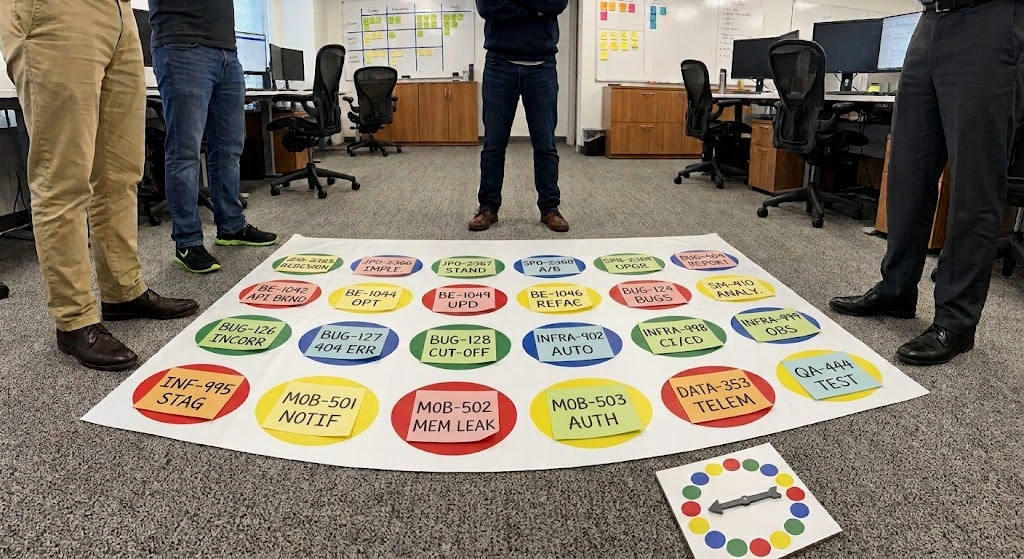
A board can provide valuable transparency. It can reveal work in progress, dependencies, bottlenecks and priorities. But a board containing hundreds of tickets does not necessarily indicate organizational agility. The existence of a ticket does not demonstrate customer value. The completion of a ticket does not necessarily demonstrate product success. The number of tickets closed does not necessarily demonstrate productivity.
Agility is ultimately concerned with the organization's ability to learn, adapt and deliver valuable outcomes. The Agile Manifesto explicitly identifies working software as the primary measure of progress. Modern software-delivery research provides another useful perspective.
DORA, the DevOps Research and Assessment program, evaluates software delivery using measures such as change lead time, deployment frequency, failed deployment recovery time, change failure rate and deployment rework rate. These measures focus on the movement and stability of software changes rather than the number of meetings held or planning artifacts created.
This does not mean that every team should replace its Agile metrics with DORA metrics. It illustrates a broader principle: useful measurements should provide information about meaningful outcomes. The metric should help explain the system.
"The system should not be redesigned merely to improve the metric."
The difference between process compliance and agility
A mature Agile organization therefore cannot be identified simply by
counting ceremonies.
Two teams may hold the same meetings, use the same project-management
system and follow the same iteration length while operating very
differently.
One team may use its processes to identify problems, adapt priorities,
reduce unnecessary work and deliver valuable changes.
Another may use the same processes primarily to demonstrate compliance
with an organizational framework.
From the outside, both can appear
equally Agile.
The difference is visible in how decisions are made.
Agility requires the ability to respond to new information. The Agile
Manifesto explicitly values responding to change over following a
plan.
That principle creates an important test for any process:
"Can the process change when the circumstances change?"
If the answer is no, the process may be providing consistency without providing agility. This is not an argument against structure. Teams need structure to coordinate complex work. They need visibility, planning, feedback loops and mechanisms for identifying problems. The issue is proportionality.
A process should make the work easier to understand and improve. It should not become an additional layer of work that exists primarily to demonstrate that the process is being followed.
A practical test for Agile practices
Each Agile practice can therefore be evaluated against the problem it was originally intended to solve. A simple framework can be applied:
What problem is the practice solving? A retrospective should address improvement. A planning session should create alignment around upcoming work. A task board should improve transparency.
What evidence shows that the problem is being addressed? The existence of the meeting or ticket is not sufficient. The relevant evidence should be an improvement in understanding, coordination, delivery, quality or another meaningful outcome.
What happens when the practice stops producing value? A healthy process should be adaptable. If a practice no longer serves its purpose, it should be changed, simplified or removed.
This approach also aligns with the broader Agile principle of simplicity: maximizing the amount of work not done is explicitly identified as essential to agility. The objective is therefore not to maximize the number of Agile practices. It is to minimize unnecessary process while preserving the mechanisms that help a team learn and deliver effectively.
Visual: From principle to ritual
A useful way to represent the distinction is as a progression:
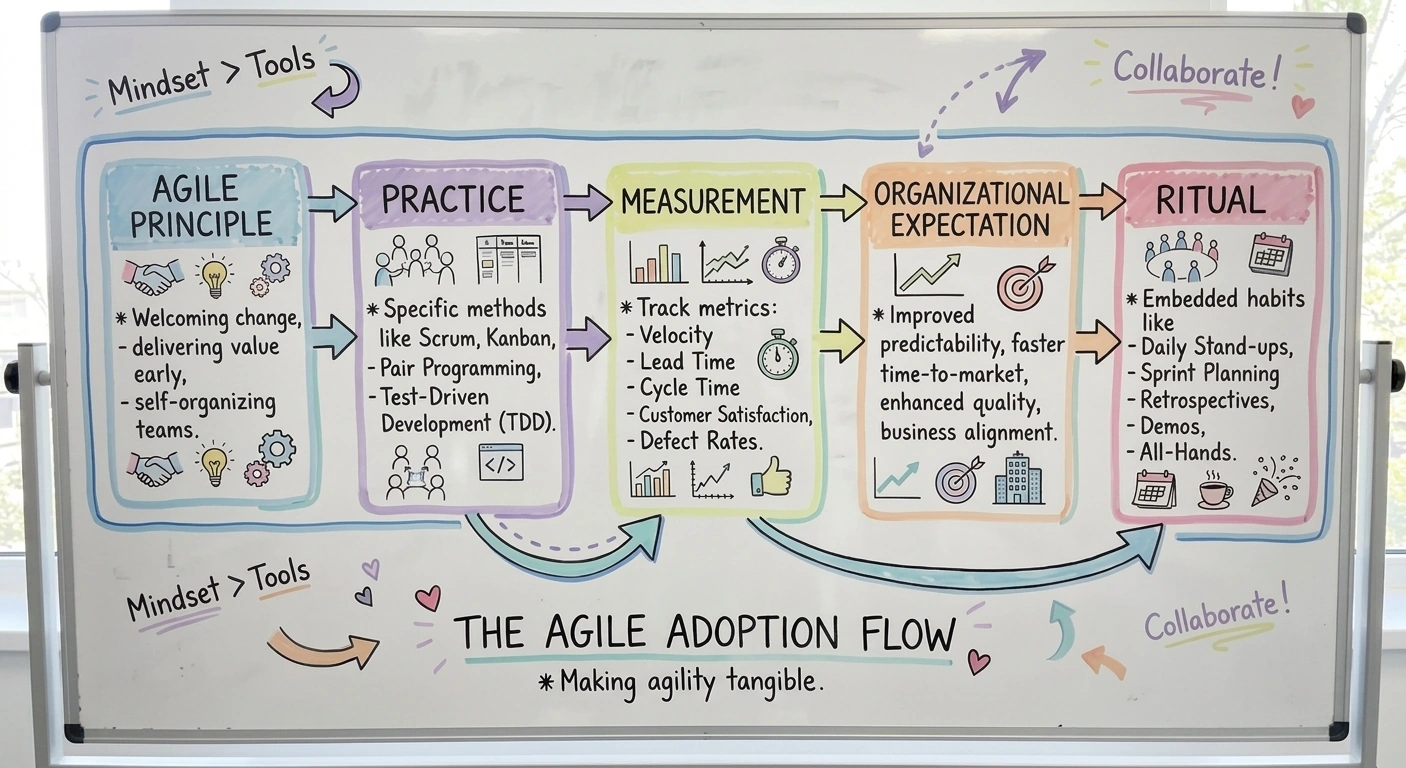
FIG 3 - A visualization of the process from principle to adoption to ritualization.
Practices are made to be used within a certain context and for mesurable outcomes. But there is a point where these practices become ambiguous and are adopted rather as an obligation that evolves into a ritual.
At the beginning, the practice exists because it solves a problem. As the practice becomes standardized, it may become measured. Once the measurement becomes an organizational expectation, compliance can become more important than the original purpose. The final stage is the ritual: the practice continues because stopping it would appear to violate the process, even when its original value has become unclear. The progression is not inevitable. The cycle can be interrupted by continuously asking whether the practice still produces the outcome for which it exists.
The reality of Agile
Agile does not require the elimination of process. It requires process to remain subordinate to its purpose. Standups can be useful. Retrospectives can be useful. Planning can be useful. Estimation can be useful. Task boards can be useful. None of these practices becomes valuable simply because it is called Agile.
The more useful question is whether
the practice improves communication, learning, decision-making, delivery
or customer value.
That distinction also changes how Agile maturity can be understood.
Maturity is not necessarily the ability to perform more ceremonies with
greater consistency.
It may instead be the ability to recognize when a ceremony is no longer
solving the problem it was designed to solve.
Agility is therefore less about following a particular process and more
about maintaining the ability to inspect, learn and adapt.
The original principles remain relevant precisely because they point
beyond the process itself.
The objective is not to become better at doing Agile.
"The objective is to become better at achieving the outcomes Agile was intended to support."
Sometimes that requires introducing a practice. Sometimes it requires changing one. And sometimes, the most appropriate improvement is to stop doing something simply because it has become part of the process.