Governance is Not Bureaucracy; It is Demarcation
Governance is not a bureaucratic hurdle, but the essential demarcation of authority, ownership, and planning required to turn project approval into coordinated delivery. Instead of considering initiation merely an administrative task or ignoring organizational realities, this article demonstrates how to create an effective implementation framework. The article outlines the mechanics of implementation by defining early governance, charter scope, stakeholder dependency, RACI responsibility, decision points, escalation procedures, realistic scheduling, resource management, budget tracking, communications, and change control.

FIG 1.0 - When the office turns into a runway.
Rules shape the office and become what drives the work, instead of establishing a clear structure at any point for the project itself and shaping the enterprise as a place where the project will get done.
Related Insights
Requirements Are the Bridge Between Intent and Reality
You can’t build blind.
Performance is in context

MXI.STUDIO EDITORIAL
Productivity | Work | Metrics | Operations
The MXI.Studio Editorial is a collection of articles, ideas, and reflections written by the people behind MXI.Studio. We explore emerging technologies, innovation, industry trends, and the current challenges of an ever-evolving world.
Governance is Not Bureaucracy; It is Demarcation
"And why project approval needs authority, ownership, and a plan before it can become coordinated delivery."
A pproving a project does not make that project go forward. And approval cannot be taken for granted. Massive corporate infrastructure slows down the process and even when the approval come, or the investment is justified or the objective sounds clear or perhaps permission has been granted, lack of established governance will still be a hindrance.
In a team or a large organization, governance is important, as it is the starting point when trying to create a workflow. Large organizations may not be ideal, but people usually find comfort in ambiguity. Not knowing who owns what and who does what; reduces the burden and blurs accountability. Assuming these structures and their problems are there to stay; the question becomes: what kind of system can we scaffold to support it as best we can?
Governance must be established early on as part of the execution of a project. Failing to assign responsibilities means not knowing who is involved and who holds the authority at each level.
Approval is just a permission granted by higher-ups.
Governance and project setup provide the missing structure. Governance establishes authority, accountability, oversight, and the rules for making consequential decisions. Planning translates those rules into a charter, milestones, resources, budgets, communications, and protocols in response to uncertainty. Together they make an initiative executable without requiring every problem to become an improvised negotiation.
This is governance at the level of a specific initiative, not a theory of organizational hierarchy. Its purpose is to ensure that work can advance, that its limits are understood, and that important choices can be made by the right people at the right time.
Merely assigning people to have authority is vague. It does not define a process or a way to mitigate the problems at hand. As management is already a complex and fragile system, building around it requires meticulous attention. This is why treating governance as a background element or thinking that it is synonymous with a position of prestige undermines its true purpose of defining a clear pathway to proceed and run the machinery.
Approval isn’t part of the work
A business case answers whether an initiative appears worth investing in, under stated assumptions. It may describe expected benefits, costs, and major risks. It does not necessarily grant every participant the authority to spend money, alter scope, use shared staff, or accept a risk on behalf of others.
Approval is about turning the machine on and making the work as proposed proceed. Approval cannot be an element of the workflow because then we misuse what it actually means. It weakens the trust and the actual ownership of the process to the qualified people. Instead of assuming that people can work together, we assume someone, typically a manager or a team leader, needs to give an approval; turning an initial gateway into an artificial brake on the system.
A solo creator faces a smaller version of the same issue. A paid course involving a freelance editor and a distribution partner still needs a clear scope, budget, decision owner, and dates when external contributions are required. Formality should follow the scale and risk of the commitment, not the size of the organization.
The UK Government Functional Standard for Project Delivery treats roles, responsibilities, governance, planning, and control as connected parts of project delivery. The practical implication is that a decision to invest must be converted into an operating arrangement.
Execution on paper
The Project Charter establishes the recognized starting point for an initiative. It identifies the purpose of the work and confirms the authority under which the project will operate. Its role is not to specify the product or define the tool stack, but to prevent accountability and ownership from being scattered and unknown.
A useful charter records the intended outcomes, initial scope and exclusions, success criteria, assumptions, constraints, major milestones, material risks, and the resources or funding committed. It names the sponsor, the person responsible for leading delivery, and the limits of their authority. Unresolved conditions should remain visible rather than being disguised as settled facts.
The sponsor is not necessarily the person coordinating daily tasks. Sponsorship carries authority to support the initiative, protect its purpose, and resolve decisions beyond delegated limits. It also acts as a layer of oversight. The delivery lead needs enough authority to organize approved work and manage ordinary trade-offs. Confusing those roles creates either excessive escalation or commitments made without proper authorization.
A charter can occupy only a few pages for a small project. Its effectiveness depends on whether the people involved understand and accept it, not on its length.
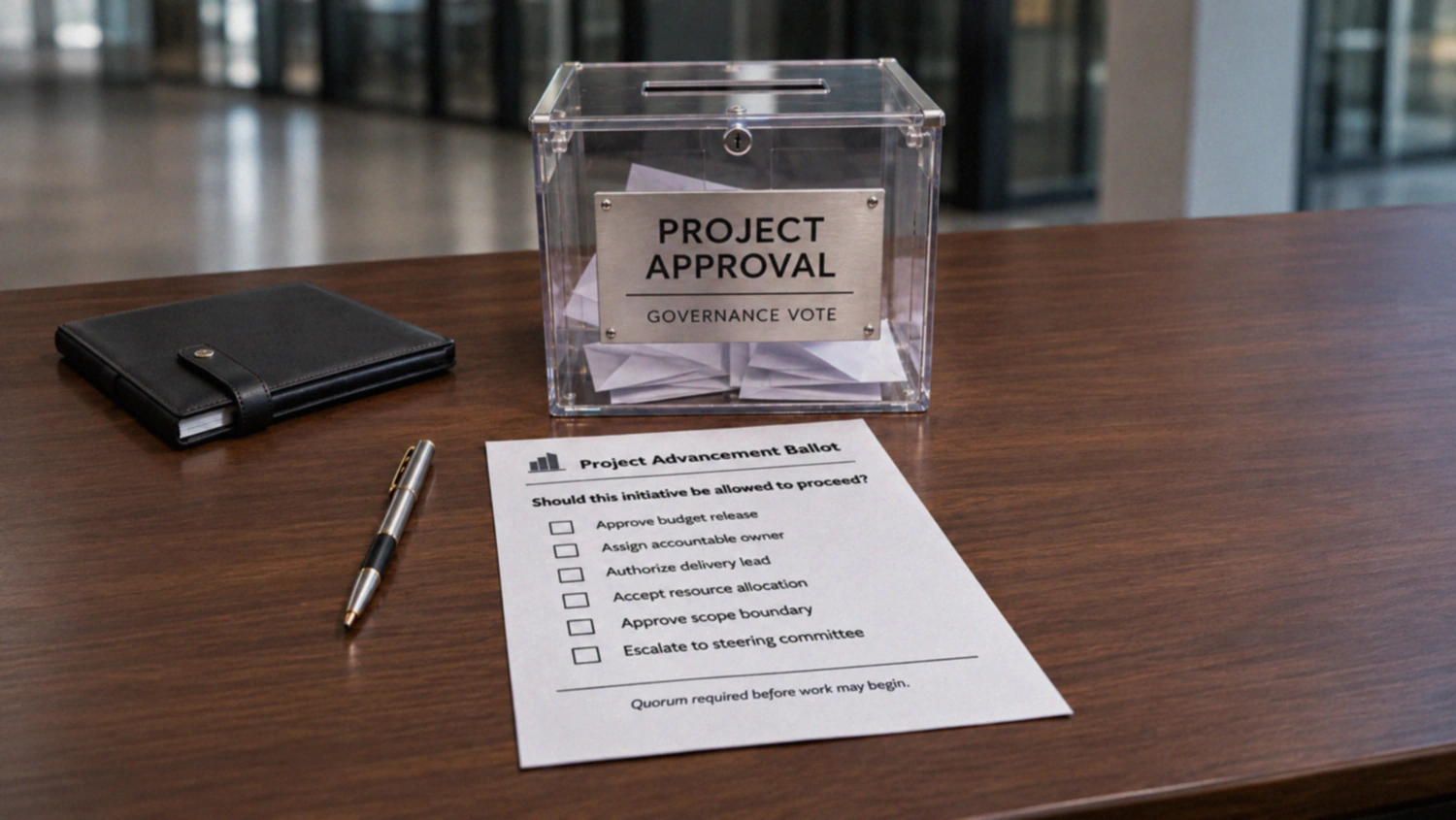
FIG. 2 — When deciding on a project is a whole activity.
Decisions are part of e very project. But when it becomes itself a complete activity that take time and slow down the process, then these are not just decisions anymore they become a new issue. Approval is a decision that should be made in parallel or before the project. Project aspect and details should ideally be known and decided upon before hand.
Stakeholders’ inputs aren’t just a checklist
A stakeholder map identifies the parties who can affect the initiative or be affected by its results. It considers interest, influence, expectations, dependencies, and the consequences of decisions. The map includes internal participants such as operations, finance, and support, but may also include customers, suppliers, partners, oversight bodies, and people whose routines will change.
Stakeholders need different levels and types of engagement. A security specialist may need to review a proposed data flow before design is finalized. A customer-service team may need early access to prototypes because it will handle the exceptions. A sponsor may want a concise explanation of risks and decisions, not daily technical reports.
The purpose is not to invite everyone into every meeting. It is to identify who holds information, authority, or a legitimate interest that could change the result. Expectations also need to be tested rather than assumed. An external supplier may be willing to provide an integration but not within the desired timetable.
Stakeholder mapping is therefore partly a study of dependencies. An apparently internal project can rely on people outside the delivery team whose availability or consent determines whether it succeeds.
Someone needs to be responsible
An initiative can have well-defined tasks and still lack clear accountability. Several people may contribute to a decision while no one has responsibility for bringing it to a conclusion. Alternatively, the person expected to deliver may have no authority to obtain the resources required.
A common way to clarify the arrangement is the RACI model, which distinguishes four roles: Responsible performs the work; Accountable owns the result or decision; Consulted provides input before action; and Informed receives relevant updates. These are role definitions, not four positions that must always be held by different people.
For significant activities and decisions, one clear accountable owner is a useful default. The owner can consult many specialists and delegate execution, but there should be no doubt about who ensures that the decision is reached and carried through. This does not remove statutory, contractual, or professional duties held by others.
A responsibility map should focus on important handoffs, deliverables, approvals, and exceptions. Detailing every trivial action can create more administrative work than clarity. The test is whether someone encountering a problem can identify who acts, who decides, and who needs to know.
Rules are made to prevent disagreement
A decision-making framework specifies where authority sits and how it should be exercised. Routine choices within agreed boundaries should normally be made close to the work. Decisions that alter strategic intent, exceed budget limits, change legal exposure, or commit other teams may require higher or specialized authority.
The boundaries need to be explicit. The deciding parties need to be advised and be aware that their solicitation is necessary. A delivery lead might approve an implementation change that preserves scope, cost, and risk tolerance, while a sponsor must authorize a substantial new expense. A change involving personal data may require privacy or security review even if it costs very little. Spending thresholds alone cannot represent every consequence.
Criteria make decisions more consistent. Options can be assessed against the intended outcome, quality, cost, time, dependencies, risk, and reversibility. A short decision record should preserve what was decided, who had authority, what evidence was considered, and why the choice was made. Without a record, the same issue may be reopened repeatedly or its assumptions forgotten.
In a way, a decision-making framework is a way to bypass direct or excessive involvement from all parties acting as an authoritative and agreed-upon base. Acting upon it is not only a shortcut, but also a way to established what the stakeholders are ready to approve.
This is not a demand for lengthy committee papers. For an ordinary choice, a dated note and a named owner may be enough. The level of evidence should rise with the significance and irreversibility of the decision.
Escalation should be designed, not improvised
Escalation is sometimes treated as evidence of failure. In practice, it is a necessary way to handle an issue that exceeds local authority or cannot be resolved within the agreed conditions. The failure is not escalation itself, but unclear rules about when and where it should happen.
Useful escalation rules establish a trigger, a route, and an expected response window. Triggers might include a critical dependency remaining blocked, a forecast exceeding an agreed tolerance, conflicting directions from owners, or a newly identified safety or security risk. The route identifies the decision-maker and any required specialist review. The response window reflects the consequence of delay, not an arbitrary requirement that every issue be answered immediately.
A request for escalation should describe the decision needed, its consequences, the available options, and the latest responsible decision date. This helps prevent a senior reviewer from becoming merely another inbox through which work must pass.
The balance is deliberate: enough oversight to protect the initiative, and enough delegated authority to prevent routine activity from waiting unnecessarily.
Escalation paths are not part of the regular flow. They are just documented path to resolve failures and problems within the industry. Not having these plans means not being prepared for what could happen.

FIG. 3 — Moving loads from one place to another made difficult by lack of execution.
A bad governing system is building multiple layer of stoppers that move against the project. Instead building proper plan and forecasting issues makes the project advance smoothly.
Planning is not predicting
Governance defines who may make commitments. Planning assigns commitments to involved parties. A project roadmap connects the intended outcomes to major phases, activities, dependencies, and decisions. It explains the direction of travel without pretending to know every daily task in advance.
Phases group coherent work, such as requirements, design, build, validation, and release preparation. They may overlap where the nature of the work allows. Milestones should represent demonstrable achievements or decisions, not just dates with reassuring names.
The U.S. Government Accountability Office's Schedule Assessment Guide provides guidance on constructing credible schedules, including the importance of logically linked activities, dependencies, and schedule risk. A roadmap is not a substitute for detailed scheduling where detail is needed, but it gives the wider group a shared view of trajectory.
Resources must be made visible
A plan that lists people without considering their actual availability can look neat on paper but be impractical and impossible to use. A resource allocation plan identifies the skills, people, equipment, facilities, suppliers, and support required, along with the timing and capacity of each contribution.
Shared resources deserve special attention. A specialist assigned to three projects may appear in every plan while having sufficient time for none. An external contractor may be available only after a separate agreement is signed. A reviewer may need several days of notice even when the review itself takes an hour.
Capacity also includes the work required to maintain current operations. Planning should distinguish a person's theoretical working hours from the capacity genuinely available for the initiative. Dependencies, holidays, training needs, and reasonable contingency can change what is achievable.
This can be translated at every scale. For an independent creator, the scarce resource may be one uninterrupted weekend or a collaborator who has promised an illustration. For a larger project, it may be a security team, test environment, or procurement window. In either case, an unconfirmed resource is an assumption, not a secured commitment.
The budget is a resource
A budget plan connects funding to the work and the period in which costs will occur. It identifies labor, suppliers, tools, infrastructure, operating needs, contingency, and the authority to approve expenditure. The total budget matters, but so do timing and the conditions under which money is released.
During execution, estimated costs need to be compared with actual spending and the forecast cost of finishing the remaining work. A project can be below budget today because planned work has not happened, not because it has become cheaper. Similarly, an early expense may be reasonable if it removes a substantial future risk.
The U.S. Government Accountability Office's Cost Estimating and Assessment Guide explains the role of documented assumptions, uncertainty analysis, and updates in credible cost estimates. The UK Treasury Green Book also provides a framework for comparing costs, benefits, and uncertainties in investment decisions.
Contingency should address identified uncertainty, not conceal weak estimates. Significant variance should prompt investigation: has the scope changed, was an assumption wrong, did a dependency slip, or is the estimate simply more accurate now? Financial monitoring is useful when it enables a decision while there is still time to change the outcome.
Communication makes it possible
A communication plan determines what information, for whom, from whom, when, and through which channel. It should also explain how questions, corrections, and urgent issues route back to the people responsible for action. It is the main gate to passing information and making sure execution flows smoothly.
Different audiences need different information. The sponsor may need a short account of progress against outcomes, forecast exposure, and decisions awaiting authorization. Contributors need actionable changes, dependencies, and relevant deadlines. External partners may need interface specifications or advance notice of testing. Users affected by a service change may need instructions, dates, and a support route.
More communication is not automatically better communication. Repeated status meetings can consume time while leaving decisions unresolved. A shared decision log, concise exception report, and predictable review rhythm may be more useful than multiple channels carrying slightly different accounts of the same project.
The plan should identify who owns the information and how feedback is handled. An update without a path to correct it can spread false confidence just as easily as accurate information.
Make risks and dependencies observable
Planning does not remove uncertainty. It makes future constraints visible early enough for informed action. Risks are uncertain yet easily anticipated, events or conditions that could affect the initiative. Issues are problems already present. Dependencies are relationships in which one activity or decision relies on another. Treating all three as the same kind of task obscures the different responses they require.
A useful record connects each material concern to an owner, a consequence, an agreed response, and a review point. A supplier delay may require an alternative delivery route. A security risk may require a control or a design change. A missing decision may require escalation rather than another week of implementation effort.
The UK Government Orange Book presents risk management as part of decision-making and organizational activity, rather than a separate exercise conducted once and filed away. The same principle applies to a project: risks and dependencies are important because they can change choices, not because they populate a register.
Controlled change is a sign of discipline
A plan made before work begins will be revised. Requirements become clearer, suppliers change their commitments, tests reveal defects, and stakeholders discover needs that were not visible initially. Treating every revision as a failure creates pressure to hide reality. Allowing every change without review makes the original investment decision meaningless.
Change control connects adaptability to authorization. When a material change is proposed, its effect on intended outcomes, scope, schedule, cost, resources, risks, and other commitments should be examined. The designated owner decides within the applicable authority and records the rationale. The plan and affected stakeholders are then updated so the organization is working from the same decision.
A minor adjustment may need only a quick documented agreement. A change that overturns the business case may require revisiting the investment itself. The process should be proportionate, with a clear difference between learning within approved boundaries and committing the initiative to a substantially different destination. Good planning is therefore not the ability to predict everything correctly. It is the ability to adapt without losing clarity about why the work exists, who can change it, and what the changes cost.
Controlled change is a sign of discipline
Governance and planning produce many useful records, but three central artifacts bring their purpose together.
Tab 1 — A structured breakdown of key competitive and market dynamics to investigate when evaluating the viability of a new project idea.
The documents should be consistent, but they need not repeat one another. A decision that changes available funding should update the budget plan. A newly assigned owner should appear in the responsibility model. A revised milestone should reflect the dependency or evidence that justified the change.
For a modest initiative, all three may fit in one well-maintained document. For a complex product, they may link to detailed records and specialist plans. The purpose is an executable shared understanding, not three impressive files.
Governance pushes execution forward
Once governance and setup are established, the initiative has more than approval. It has a recognized objective, accountable owners, usable decision rights, a credible trajectory, and mechanisms for handling uncertainty. Participants can distinguish what they are permitted to do from what needs further authorization. Sponsors can exercise oversight without directing every routine action.
This is what makes work decidable: a question can reach the person empowered to answer it, on the basis of appropriate information, before delay or ambiguity becomes the default response.
Governance cannot guarantee successful delivery. It can establish the conditions under which difficulties become visible and decisions remain possible. That is the practical connection between strategic authorization and controlled execution.
"The initiative now has a reason to exist and a way to operate. The next question is what, precisely, must be built."
text_snippet REFERENCES
1. Enterprise Project-to-Product Process Framework — Chapter 2, “Governance & Project Setup”
Primary process framework named for this article; contents represented through the supplied outline. The complete chapter was not provided for independent review.
2. UK Government — Government Functional Standard GovS 002: Project Delivery.
https://www.gov.uk/government/publications/government-functional-standard-govs-002-project-delivery3. U.S. Government Accountability Office (2015) — Schedule Assessment Guide: Best Practices for Project Schedules. GAO-16-89G.
https://www.gao.gov/products/gao-16-89g4. U.S. Government Accountability Office (2020) — Cost Estimating and Assessment Guide: Best Practices for Developing and Managing Program Costs. GAO-20-195G.
https://www.gao.gov/products/gao-20-195g5. UK HM Treasury — The Green Book: Appraisal and Evaluation in Central Government.
https://www.gov.uk/government/publications/the-green-book-appraisal-and-evaluation-in-central-government6. UK HM Treasury — The Orange Book: Management of Risk, Principles and Concepts.
https://www.gov.uk/government/publications/orange-bookAmbition transformed into operational systems.